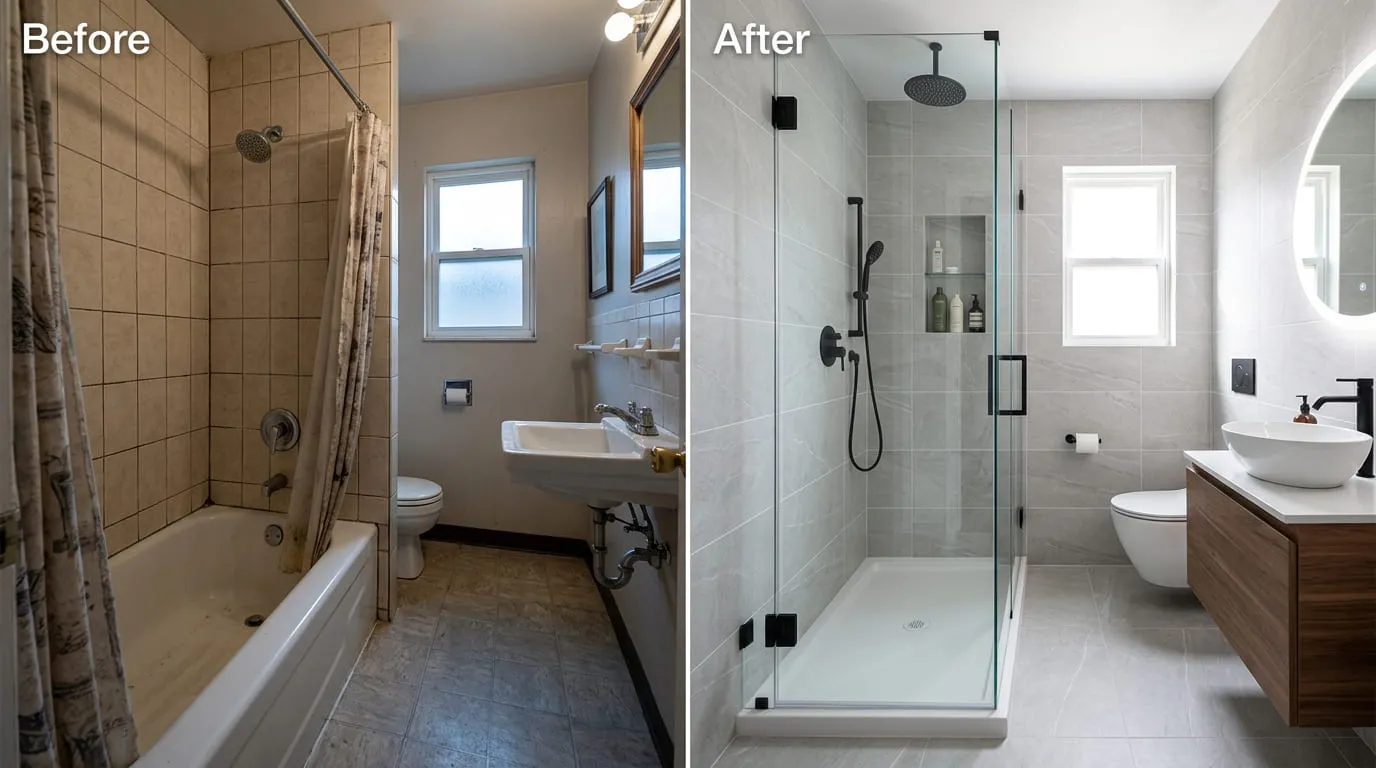
How much does it cost to convert a tub to a walk-in shower in Lakewood, CO?
The cost depends on the shower system, bathroom size, material selection, drain and valve work, glass, accessibility features, demolition requirements, and any hidden repairs discovered after the tub is removed. Belmar Wood Plumbing provides a written estimate after reviewing the actual bathroom and your goals.
Why are tub-to-shower conversion quotes so different?
Quotes can differ because the scopes are different. One estimate may cover a basic shower base and wall panels, while another includes demolition, plumbing changes, custom tile, waterproofing, glass, a bench, new fixtures, permits, or repairs to water-damaged materials. Always compare what is included, not just the final number.
Can I convert my bathtub to a shower without a full bathroom remodel?
Yes. Many homeowners choose a focused alcove tub-to-shower conversion without renovating every part of the bathroom. However, the area behind the tub must still be opened, evaluated, prepared, waterproofed, and finished correctly. Learn more about our bathroom remodeling options.
How long does a tub-to-shower conversion take?
The timeline depends on the chosen materials and the work required. Prefabricated or wall-panel systems may move faster than a custom tile shower, while plumbing relocation, hidden damage, permitting, drying/curing requirements, custom glass, and inspections can extend the schedule. We explain the expected timeline before work starts.
Can a tub-to-shower conversion really be completed in one day?
Some limited, straightforward prefabricated conversions may be marketed as one-day projects. A custom project or a conversion involving plumbing changes, waterproofing, tile, damage repair, curing time, or inspections often takes longer. We provide a realistic schedule based on your actual scope rather than making a blanket promise.
Is a low-threshold shower safer than a bathtub for seniors?
A low-threshold shower can reduce the step-over height compared with a conventional tub, which may make daily entry easier. The best solution depends on mobility, bathroom layout, shower-base selection, flooring, drainage, grab-bar placement, seating needs, and the individual user's needs. Consider our walk-in tub options as an alternative.
Can you add grab bars, a bench, and non-slip flooring?
Yes. Your project can include or prepare for grab bars, a handheld showerhead, corner seat, fold-down bench, slip-resistant shower base, and other accessible shower features. We evaluate placement and wall backing as part of the planning process.
Can my shower be curbless or wheelchair accessible?
A curbless or barrier-free shower may be possible, but it requires a site-specific review. Floor framing or slab conditions, drain placement, available slope, waterproofing method, bathroom layout, and entry dimensions all affect feasibility.
Do you have to move the drain when converting a tub to a shower?
Not always. In some alcove conversions, the drain can remain in approximately the same location. In other projects, the shower base design, desired layout, floor condition, or drainage requirements make a drain relocation necessary.
Can the shower valve and showerhead be moved higher?
Yes, shower valve relocation or showerhead-height changes may be included when the wall is open. This is a good time to discuss handheld showerheads, diverters, pressure-balance or thermostatic valve options, and fixture placement.
How do you prevent leaks behind new shower walls?
Leak prevention requires the right preparation before the finished walls are installed. Depending on the shower system, this can include a properly installed shower base or pan, compatible wall substrate, approved waterproofing components, sealed transitions, correct plumbing connections, and final checks before completion.
Do you flood-test the shower pan before tile or wall panels go in?
When a project uses a shower-pan or waterproofing system for which flood testing is applicable, testing may be part of the quality-control process before finishes cover the assembly. The exact approach depends on the material system, manufacturer requirements, and project design.
Is tile better than acrylic or solid-surface shower walls?
There is no single best choice. Tile offers customization and design flexibility but usually requires more upkeep. Acrylic and solid-surface walls offer smooth, low-maintenance finishes with fewer grout lines. The best material depends on your preferred style, budget, cleaning habits, and renovation goals.
What shower wall material is easiest to clean?
Acrylic and solid-surface wall systems are often favored for easy cleaning because they have fewer grout lines. Glass doors still need regular care to reduce water spots, while tile requires attention to grout and sealant maintenance.
Should I remove the only bathtub in my Lakewood home?
It depends on your household and future plans. Families with young children may value at least one tub, while households focused on accessibility or daily shower use may prefer a walk-in shower. If possible, retaining one bathtub elsewhere in the home can provide flexibility.
Do I need a permit for a tub-to-shower conversion in Lakewood?
Permit needs depend on the scope. Plumbing, electrical, mechanical, structural, or larger construction work may trigger permit and inspection requirements. Lakewood processes permits through eTRAKiT, and we can explain the project scope and coordinate the appropriate process where required.
What should be included in a tub-to-shower conversion estimate?
A useful estimate should clarify demolition, disposal, plumbing work, drain and valve changes, wall preparation, waterproofing, shower base, wall system, fixtures, accessories, glass, cleanup, potential permit responsibilities, timeline, warranty terms, and how hidden damage is handled.
Can you convert a tub if there is water damage, mold, or a soft subfloor?
Potentially, yes—but the underlying condition must be evaluated and corrected before a new shower is installed. We document what is found after demolition, explain the recommended repair, and obtain approval for work outside the original scope. If needed, we also offer water damage restoration.
Can I do a bathtub-to-shower conversion myself?
Cosmetic tasks may be manageable for experienced homeowners, but plumbing changes, drainage, shower-pan construction, waterproofing, wall preparation, and concealed damage can create long-term risks. A professional assessment helps you understand the full scope before deciding.